
Master Data Management has long been positioned as the cornerstone of enterprise data consistency. By creating authoritative records for entities like customers, products, and suppliers, MDM helps organizations reduce duplication and improve operational alignment. Reference data, however, has often been treated as a subset of this discipline, managed using similar tools and processes. In the age of AI, this assumption no longer holds. Reference data plays a fundamentally different role in how data is interpreted, reasoned over, and reused by AI systems. This article explains why reference data management must be approached differently than master data management and why this distinction is critical for building an AI-ready Data Foundation.
Understanding the traditional role of master data management
Master Data Management focuses on identifying and maintaining a single, trusted representation of core business entities. These entities are typically nouns that represent things the business interacts with directly, such as customers, products, employees, or locations.
MDM systems are designed to resolve duplicates, enforce data quality rules, and synchronize master records across operational systems. Success is often measured by record completeness, accuracy, and consistency.
This approach works well for transactional integrity and operational reporting. It ensures that when different systems reference a customer or product, they are referring to the same entity. However, MDM is not designed to manage meaning. It manages records.
What reference data actually represents
Reference data is different in nature. Instead of representing business entities, reference data represents classifications, categories, codes, and controlled values that give context to other data.
Examples include:
- Product categories and hierarchies
- Risk ratings and compliance classifications
- Status codes and lifecycle stages
- Industry, geography, and regulatory codes
Reference data defines how entities are interpreted rather than what the entities are. It answers questions about classification, eligibility, grouping, and rules. In AI-driven environments, these distinctions matter deeply.
Why treating reference data like master data creates problems
When reference data is managed using the same approaches as master data, several issues emerge. Tools optimized for record matching and survivorship struggle to capture the semantic richness of reference data. Governance workflows focus on approval rather than meaning. Relationships between reference values are often flattened or lost.
This leads to situations where reference data may be consistent at a technical level but inconsistent in interpretation. Two systems may use the same code while applying different business rules. Or different codes may represent the same concept across domains. For AI systems, these inconsistencies are toxic. An AI-ready Data Foundation requires clarity of meaning, not just consistency of values.
The role of reference data in AI reasoning
AI systems rely on reference data to interpret patterns, group observations, and apply constraints. Reference data shapes how models learn and how outputs are categorized and explained. When reference data is ambiguous or poorly governed, AI systems are forced to infer meaning implicitly. This introduces hidden assumptions that are difficult to detect and even harder to explain.
In contrast, when reference data is managed as a semantic asset, AI systems can reason over it explicitly. This enables more reliable predictions, better explainability, and safer reuse across use cases.
Why AI amplifies the differences between RDM and MDM
In traditional analytics, reference data issues often surface as reporting discrepancies. Analysts reconcile differences manually and move on. AI changes the stakes.
AI models reuse reference data at scale, across domains, and in contexts that were never originally intended. Small semantic inconsistencies propagate quickly and affect downstream decisions. This amplification effect makes it clear that reference data management cannot simply be a subset of master data management. It requires its own strategy, architecture, and governance model.
Reference data as a semantic layer
The key distinction between reference data and master data lies in semantics. Reference data encodes meaning. It defines how entities are classified, compared, and constrained.
Managing reference data effectively means managing meaning explicitly. This includes defining what a value represents, how it relates to other values, and when it is valid.
An AI-ready Data Foundation treats reference data as part of a semantic layer that sits above physical data storage and synchronization mechanisms.
Why semantics changes the reference data conversation
Semantic technologies allow organizations to move beyond static lists and lookup tables. Instead of managing reference values in isolation, semantics connects them to business concepts, rules, and relationships.
This enables reference data to be interpreted consistently across systems and AI models. It also supports reasoning and inference rather than simple matching. Semantic ontologies and knowledge graphs are the technologies that make this possible.
Ontologies define what reference data means
Ontologies provide formal definitions of concepts and classifications. They describe not only values, but also the relationships and constraints that give those values meaning.
In the context of reference data, ontologies can define:
- Classification hierarchies and taxonomies
- Relationships between categories and business concepts
- Rules that govern valid combinations and transitions
- Contextual meaning across domains
This moves reference data management from synchronization to understanding. In an AI-ready Data Foundation, ontologies act as the semantic contract that reference data aligns to.
Knowledge graphs operationalize reference data meaning
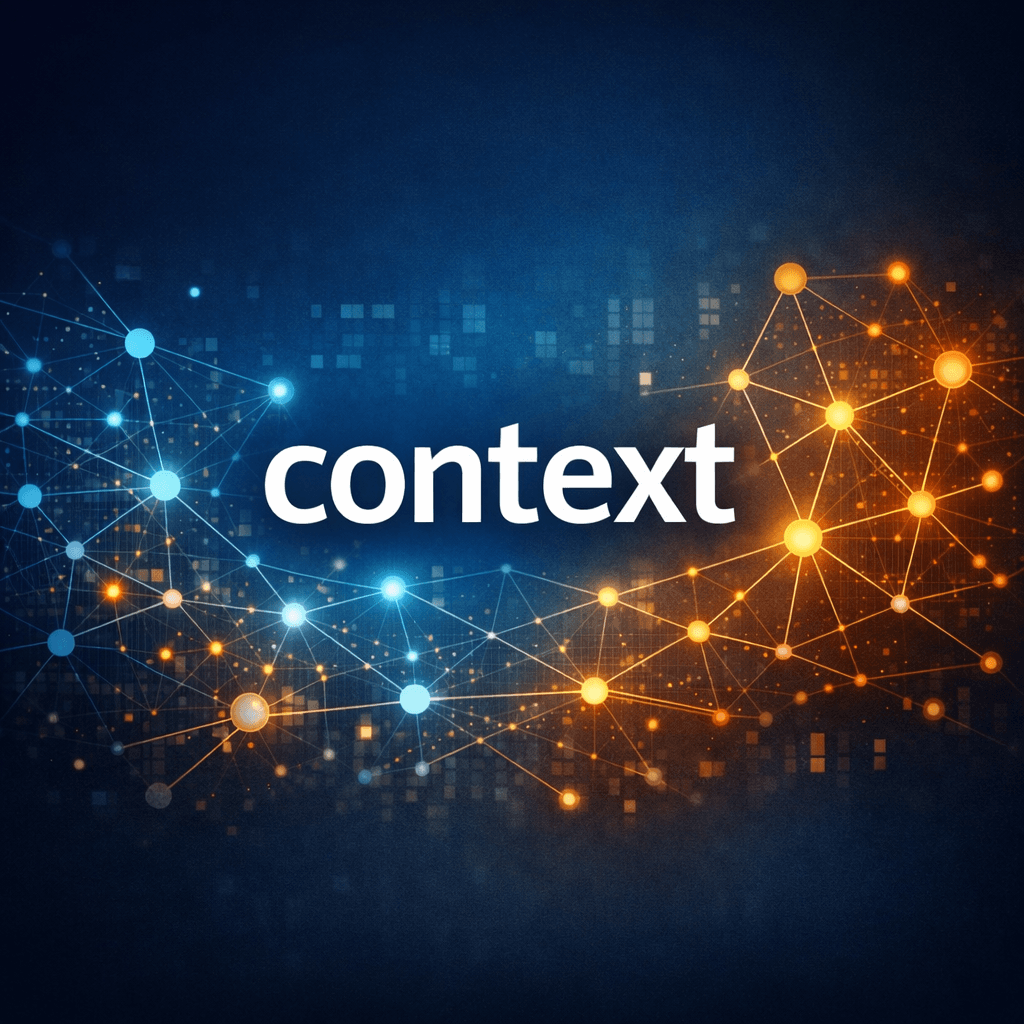
Knowledge graphs instantiate ontologies with real data and connect reference values to the entities they classify. Instead of existing as isolated codes, reference data becomes part of a connected semantic network.
This allows AI systems to traverse relationships, apply constraints, and reason across domains. Knowledge graphs enable reference data to be interpreted consistently across the enterprise, reused safely in new AI use cases, and explained in terms of business meaning rather than technical identifiers. They also support centralized governance while remaining flexible enough to evolve as business needs change. This connectivity is essential for enterprise-scale AI.
Governance requirements differ for reference data and master data
MDM governance typically focuses on stewardship, approval workflows, and data quality metrics. These controls are important, but they do not address semantic drift.
Reference data governance must focus on meaning. Definitions, relationships, and rules must be versioned, reviewed, and governed alongside values. In an AI-ready Data Foundation, governance ensures that reference data remains interpretable by both humans and machines over time. This supports trust, compliance, and explainability.
When MDM tools fall short for reference data
Many MDM platforms include reference data capabilities, but these are often limited to code management and synchronization. They lack the ability to model complex relationships, contextual rules, and evolving semantics.
This does not mean MDM is unnecessary. MDM remains critical for managing core entities. The issue arises when reference data is forced into tools and processes that were never designed to manage meaning. Organizations that recognize this distinction are better positioned to support AI at scale.
Signs your reference data is constrained by an MDM mindset
Organizations often struggle with AI readiness without realizing that reference data is the limiting factor. Common indicators include:
- Reference values that are technically consistent but semantically unclear
- Heavy reliance on documentation and tribal knowledge to interpret classifications
- Difficulty reusing reference data across AI use cases
- Challenges explaining model behavior tied to categorical inputs
These symptoms suggest that reference data is being managed as static master data rather than as a semantic asset.
Building an AI-ready approach to reference data
Moving beyond an MDM-centric view of reference data does not require abandoning existing investments. Many organizations start by layering semantic capabilities on top of current systems.
By defining ontologies, aligning reference data to shared concepts, and exposing relationships through a knowledge graph, teams can modernize reference data incrementally. This approach allows organizations to preserve operational stability while evolving toward an AI-ready Data Foundation.
Why this distinction matters now
As AI becomes embedded in decision-making, the cost of semantic ambiguity increases. Reference data shapes how AI systems classify, predict, and explain outcomes.
Treating reference data as a secondary concern or as a subset of master data management limits the effectiveness of AI initiatives. A new approach is required, one that recognizes reference data as a semantic cornerstone.
Conclusion
Master data management and reference data management serve different purposes, and in the age of AI, those differences matter more than ever. MDM focuses on managing records and ensuring consistency of core entities. Reference data defines meaning, context, and rules that shape how data is interpreted.
An AI-ready Data Foundation requires reference data to be managed as a semantic asset, not just synchronized values. By using semantic ontologies and knowledge graphs, organizations can create a reference data layer that supports reasoning, governance, and reuse at enterprise scale. Doing reference data management differently than master data management is not a theoretical distinction. It is a practical necessity for AI success.