Lessons from the Gartner Data & Analytics Summit
At the 2026 Gartner Data & Analytics Summit, one theme appeared again and again:
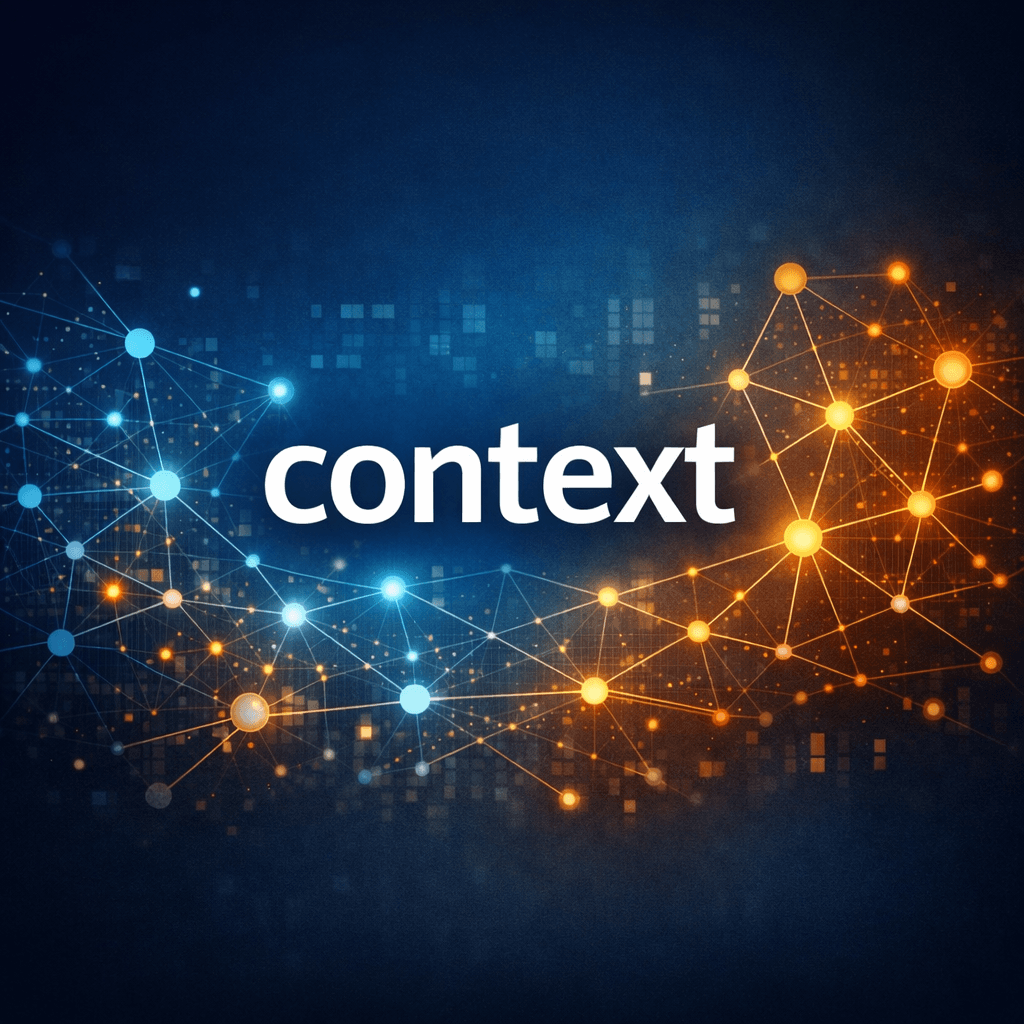
Context.
This wasn’t a fringe idea discussed in hallway conversations. It was elevated to the main stage of the opening keynote.
During the keynote “Navigate AI on Your Data & Analytics Journey to Value,” analysts Georgia O’Callaghan and Adam Ronthal delivered a clear message:
Context is King.
Their recommendation to enterprise leaders was equally direct:
Strengthen your foundation — including creating a single, unified context layer.
And it wasn’t limited to the keynote. In the session “Get Ready for Data and Analytics 2030,” Gartner Distinguished VP Analyst Rita Sallam reinforced the same theme, urging organizations to:
- Make context their next critical infrastructure investment
- Treat semantic layers and context as long-term strategic assets
- Build semantic literacy and collaboration
- Secure funding to develop the broader concept of a context layer
She echoed the message again in “Top Data and Analytics Predictions for 2026,” noting that:
Semantic layers — or broadly speaking context — will increasingly be treated as critical infrastructure.
In other words, context has clearly entered the mainstream conversation about enterprise data and AI. But walking the expo floor and speaking with attendees revealed something equally important. While the importance of context is widely recognized, very few organizations have actually solved it.
“Where Does Ground Truth Come From?”
One question surfaced repeatedly in conversations across the conference:
“How does your system establish ground truth?”
Enterprise leaders are excited about AI — especially agentic AI and generative AI — but they are increasingly aware that AI systems cannot operate reliably without trusted context.
Without it:
- AI systems misinterpret meaning
- Metrics vary across teams
- Governance policies remain disconnected from operational systems
- Agents cannot reason about enterprise knowledge
Many organizations are discovering that AI amplifies existing ambiguity in their data landscape.
And that leads to a fundamental realization:
Data alone does not provide meaning. Context does.
Context Is Becoming Critical Infrastructure
One of the most striking moments from the conference came from Rita Sallam’s framing:
“Make context your next critical infrastructure investment.”
That represents a significant shift in thinking.
Historically, organizations treated semantic technologies as niche capabilities used for things like:
- knowledge management
- data integration
- enterprise search
- metadata management
But AI changes the equation.
When AI systems begin making decisions, recommending actions, or automating processes, context becomes foundational infrastructure — just like compute, storage, and networking.
This is why Gartner emphasized the need to:
- treat semantic layers and context as long-term strategic assets
- build semantic literacy across the organization
- secure funding for context infrastructure
These are not incremental improvements.They represent an entirely new architectural layer for enterprise intelligence.
But the Market Still Lacks a Unified Approach
Despite the growing recognition of context’s importance, one thing was clear at the summit:
The industry is still early in figuring out how to implement it.
Many vendors are approaching the problem from narrow angles:
- BI vendors focus on metrics layers
- metadata platforms focus on catalogs
- vector databases focus on retrieval
- governance tools focus on policy management
Each of these approaches delivers value. But none provide the authoritative context layer that connects meaning, governance, and operational behavior across the enterprise.
This fragmentation explains why many organizations are still struggling with:
- inconsistent metrics across teams
- disconnected governance policies
- brittle AI systems
- agents that cannot reason over enterprise knowledge
The missing piece is authoritative context.
The result is what many organizations experience today:
AI that is powerful — but not trustworthy.
From Data Infrastructure to Context Infrastructure
The takeaway from this year’s summit is clear: The conversation is shifting.
Enterprises are moving from asking: “How do we manage data?”
to asking: “How do we provide context for AI?”
And the answer increasingly points toward a unified context layer built on ontologies and knowledge graphs.
Such a layer enables organizations to:
- align business meaning across systems
- operationalize governance policies
- connect data to decisions and actions
- provide trusted context for AI agents and applications
In short, it allows enterprises to turn data into intelligence.
Ontologies Are Reappearing in the Conversation
Another interesting signal from the conference was the re-emergence of ontologies in enterprise architecture discussions.
For years, ontologies were often viewed as academic or niche tools.
But in the context of enterprise AI, they are being reconsidered as a practical way to establish authoritative meaning across systems.
Why?
Because ontologies allow organizations to formally define:
- core business entities
- relationships between concepts
- rules and constraints
- shared semantic models across domains
In other words, ontologies provide the structure needed to create consistent enterprise context.
And as AI systems begin operating across business processes, data products, and operational systems, that shared context becomes essential.
Multiple Forms of Context Are Emerging
Conversations at the summit also highlighted that context is not a single thing.
Organizations are beginning to recognize multiple forms of context emerging across the enterprise, including:
Semantic context:Shared meaning, entities, and relationships.
Operational context: Business processes, workflows, and activities.
Governance context: Policies, ownership, and compliance requirements.
Behavioral context: How systems and users interact over time.
Decision context: How insights translate into actions and outcomes.
The challenge is that these contexts often exist in separate systems and tools, making it difficult to establish a single, authoritative view of meaning and intent across the enterprise.
This fragmentation is exactly what the concept of a context layer is meant to address.
Progress Is Slower Than the Hype
Despite the excitement around AI, another reality was clear from the conversations overheard at the summit:
Progress is slower than the hype suggests.
Many organizations are experimenting with AI, but they are still struggling with foundational issues:
- inconsistent definitions of key metrics
- fragmented data ownership
- disconnected governance policies
- lack of shared semantic models
In many cases, organizations are trying to deploy AI on top of data environments that were never designed to support machine reasoning.
This creates a mismatch between AI ambition and data readiness.
As one attendee put it during a conversation:
“We’re moving fast on AI — but we’re still figuring out what our data actually means.”
The Painkiller vs Vitamin Test
One of the most revealing dynamics at the conference was how different vendors positioned their solutions.
Many tools promise to make AI easier, faster, or more powerful.
But very few address the underlying issue of enterprise context.
This highlights an important distinction between:
Vitamins: Tools that improve productivity but are not essential.
Painkillers: Technologies that solve a critical, unavoidable problem.
Context falls squarely into the painkiller category.
Without it:
- AI cannot reliably reason about enterprise knowledge
- Governance cannot be operationalized
- Business meaning remains fragmented
- Decisions cannot be traced or trusted
This is why Gartner’s recommendation to treat context as critical infrastructure is so significant.
It signals that context is moving from an optional enhancement to a foundational capability for enterprise AI.
The Next Phase of Enterprise AI
If the last decade was about building data platforms, the next decade will be about building context infrastructure.
The Gartner Data & Analytics Summit made one thing clear:
The importance of context is no longer theoretical. It has reached the mainstream of enterprise AI strategy. Now the real work begins.
Organizations must move beyond discussing context and start building the architectures that make it operational.
Because in the age of AI:
It’s foundational.